
The Midface and Jawline: Facelift Techniques, the SMAS Layer, and Why It Matters
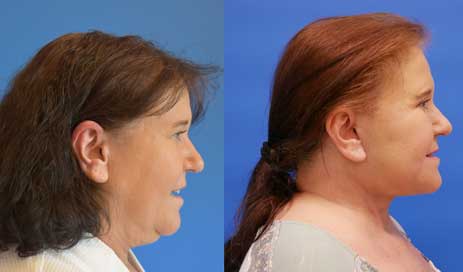
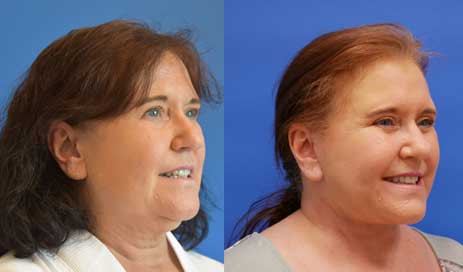
The facelift is the procedure most people associate with facial rejuvenation — and for good reason. When performed well, it produces changes to the midface and jawline that no other intervention can replicate: a restored jaw contour, diminished jowling, smoother nasolabial folds, and an overall lifting of the facial tissues that reads as genuinely youthful rather than simply “done.”
But the word “facelift” covers a lot of ground. Techniques have evolved substantially over the past two decades, and the difference between approaches — and between surgeons — is significant. Understanding what a modern facelift actually involves helps patients ask better questions and make more informed decisions.
What Has Changed in Facelift Surgery
Earlier facelift techniques focused primarily on the skin — making incisions, pulling the skin tighter, and excising the excess. The results could be dramatic initially, but they also tended to produce that characteristic “windswept” or pulled appearance, because the skin under tension eventually relaxes, and the result fades faster than a more structurally sound approach would.
The shift that transformed facelift surgery was the incorporation of the SMAS — the superficial musculoaponeurotic system, discussed in Part 1 of this series — as the primary structure being addressed. The SMAS is a continuous fibromuscular layer that sits beneath the fat and connects the facial muscles to the overlying skin. By repositioning and tightening the SMAS rather than just the skin, the surgeon creates a result that is both more durable and more natural — because the skin is redraped over a properly repositioned foundation rather than simply stretched across it.
Mini Facelift vs. Full Facelift
One of the most common questions in consultation is whether a mini facelift or a full facelift is more appropriate. The honest answer is that it depends on the degree of change needed.
A mini facelift — sometimes called a short-scar lift or a mid-facelift — uses smaller incisions, typically confined to the area around the ears, and focuses primarily on the midface. It’s an appropriate option for patients with moderate laxity who are earlier in the aging process and who don’t yet have significant jowling or lower facial descent. Recovery is somewhat faster, and the results are real — but they’re also more limited in scope.
A full facelift addresses the midface and lower face more comprehensively, with incisions that extend behind the ears into the hairline. It allows for more significant repositioning of the SMAS and more thorough correction of jowling, deep folds, and significant skin laxity. For patients who need meaningful change rather than a subtle refresh, a full facelift is generally the more appropriate recommendation.
Dr. Sharma’s approach is to be direct about which option genuinely fits the patient’s anatomy and goals, rather than defaulting to the less extensive option because it’s easier to sell. A patient who needs a full facelift and gets a mini facelift will not be satisfied — and that’s a disservice to everyone.
The Deep Plane Facelift: A More Advanced Approach
Beyond the standard SMAS facelift lies a more technically demanding technique known as the deep plane facelift. Where a traditional SMAS lift operates superficial to — or just at the surface of — the SMAS layer, the deep plane approach releases the SMAS at a deeper level and mobilizes it as a composite unit together with the overlying fat. This composite flap is then repositioned as a single, cohesive structure rather than in separate tissue layers. The key distinction is in the ligamentous release: the deep plane specifically addresses the retaining ligaments of the midface — particularly the zygomatic and masseteric cutaneous ligaments — that anchor the facial soft tissues to the underlying skeleton. In the aging face, these ligaments contribute significantly to the descent of the cheek fat pad and the deepening of the nasolabial fold. By releasing them directly, the deep plane facelift can achieve more substantial repositioning of the midface and a more natural, lasting correction of these folds than a standard SMAS technique alone.
That said, not every patient is a candidate for this approach, and the additional technical complexity demands a high level of surgical expertise and anatomical precision. The decision between a standard SMAS facelift and a deep plane technique is not simply a matter of which is “better” in the abstract — it depends on the individual patient’s anatomy, the degree and pattern of descent, skin quality, and overall goals. This is precisely why a careful, individualized assessment is so essential. Dr. Sharma evaluates each patient with the full range of techniques available to him, and recommends the approach most likely to produce the best result for that particular face — not a one-size-fits-all solution.

The Role of Fat Grafting
One of the most significant evolutions in facelift surgery in recent years has been the routine incorporation of fat grafting. A facelift lifts and tightens — but it doesn’t restore volume. And volume loss, as discussed in Part 1 of this series, is one of the central features of the aging face.
Adding fat grafting to a facelift allows Dr. Sharma to address both descent and deflation in a single procedure — restoring the fuller, rounder contours of a younger face while also eliminating the laxity and jowling that made surgery necessary in the first place. The combination consistently produces more natural and comprehensive results than either procedure done in isolation.
Incisions, Scarring, and What to Expect
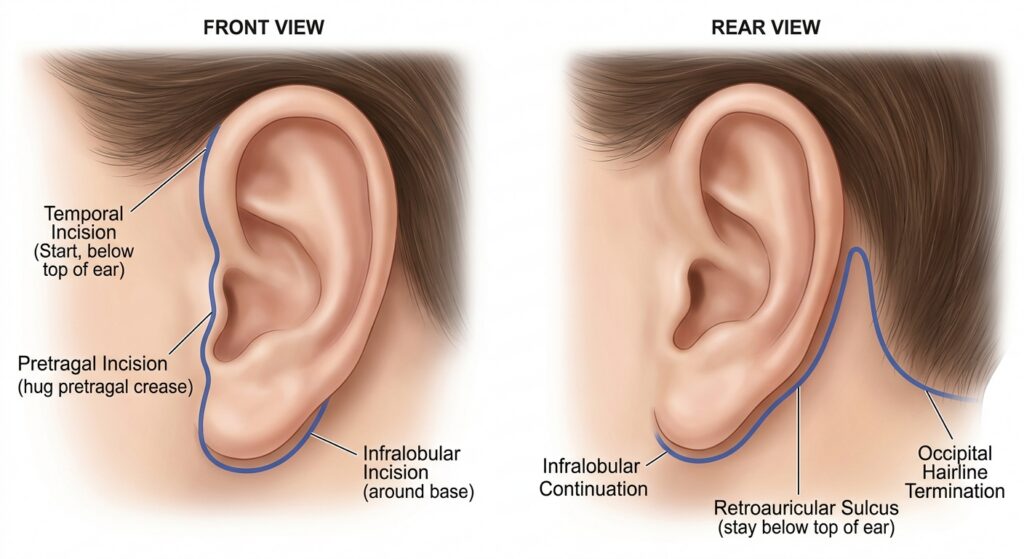
Facelift incisions are carefully placed in the natural contours around the ear — in front of the tragus, around the earlobe, and behind the ear into the hairline. In the hands of an experienced surgeon, these incisions heal to lines that are essentially undetectable within a few months. The goal is always to ensure that a patient can wear their hair up, wear earrings, and go about their life without any visible sign of having had surgery.
Recovery from a facelift typically involves a week of more significant swelling and bruising, followed by a gradual resolution over the following two to three weeks. Most patients are comfortable being seen in public within two to three weeks and back to normal activity within a month. The final result continues to develop as residual swelling resolves — a process that can take three to six months — but the improvement is visible and meaningful well before that.
In the next post, we move to the neck — the area that, in Dr. Sharma’s experience, is what brings more patients through the door than any other single concern. And for good reason.
Ready to Talk Through Your Options?
If this series is raising questions about your own situation, that’s exactly what it’s meant to do. Dr. Sharma offers private consultations at his Austin practice where he’ll take the time to evaluate your concerns, explain what he sees, and help you understand what’s realistically achievable. Call (512) 324-2765 or visit the contact page to get started.